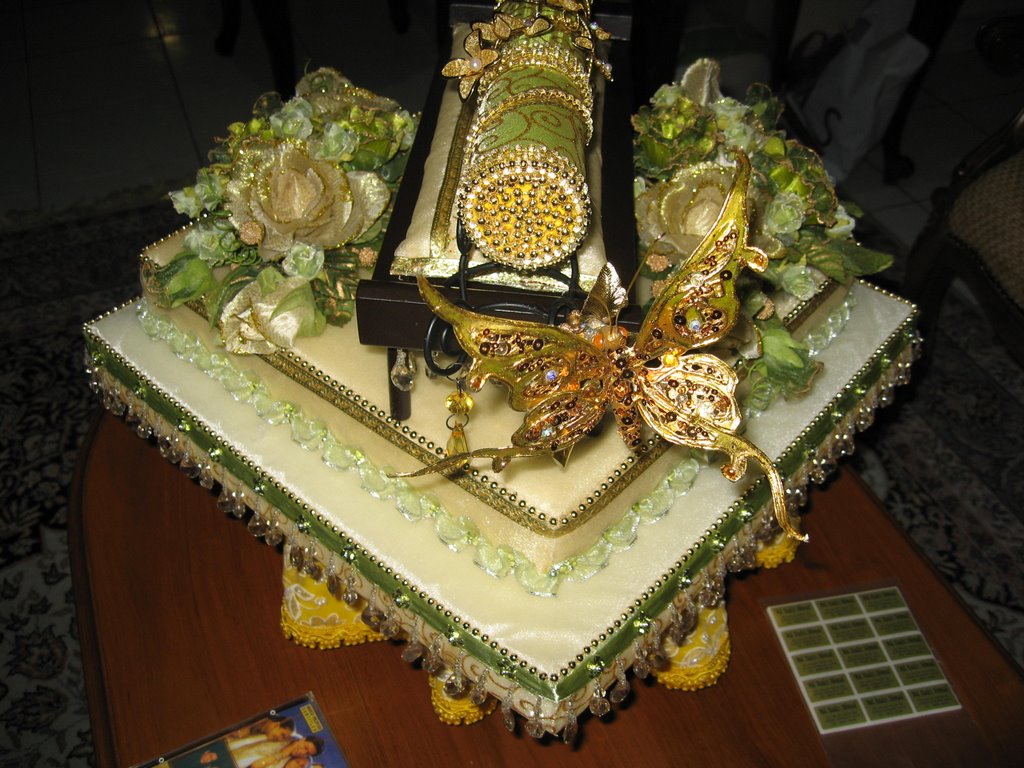
Friday, August 25, 2006

Isra' Mi'raj : Suatu Tauladan Yang Muktabar .

Isra' Mi'raj : Suatu Tauladan Yang Muktabar .

Oleh pesona Ogos 5, 2006


Pada malam 27 Rejab, tahun kesebelas kerasulan junjungan besar Nabi Muhammad saw telah berlaku satu peristiwa yang amat menakjubkan yang dapat memberi pengajaran kepada umat Islam seluruh dunia berikutan berlakunya peristiwa itu.

Israk bererti perjalanan Nabi dari Masjidil Haram di Mekah ke Masjidil Aqsa di Baitulmaqdis di Palastin.

Allah swt merakamkannya dalam Surah Al-Israa’, 17:1 yang bermaksud:


“Maha suci Allah yang telah memperjalankan hambaNya (Muhammad) pada malam hari dari Masjidil Haram (di Mekah) ke Masjidil Aqsa (di Baitul-Maqdis), yang Kami berkati sekelilingnya, untuk memperlihatkan kepadanya tanda-tanda (kekuasaan dan kebesaran) Kami. Sesungguhnya Allah jugalah yang maha Mendengar lagi Maha Mengetahui.”

Mi'raj pula bererti perjalanan baginda saw dari Masjidil Aqsa ke Sidratul Muntaha di langit ketujuh, dekat singgahsana.


Allah menggambarkan dalam Al-Quran yang bermaksud:

“ Dan demi sesungguhnya! (Nabi Muhammad) telah melihat (Jibril dalam bentuk rupanya yang asal) pada waktu yang lain iaitu di Sidratul Muntaha. Dekatnya ada syurga tempat tinggal, (Muhammad melihat Jibril) ketika Sidratul Muntaha diliputi oleh sesuatu yang meliputinya. "

“Penglihatan (Muhammad) tidak berkisar daripada meyaksikan dengan tepat (akan pemandangan yang indah di situ yang diizinkan melihatnya), dan tidak pula melampaui batas"

“Demi sesungguhnya baginda telah melihat sebahagian daripada sebesar-besar tanda-tanda (yang membuktikan luasnya pemerintahan dan kekuasaan) Tuhan-Nya.”


(Maksud surah an-Najm, ayat 13-18)

Isra' Mi'raj dapat disimpulkan sebagai satu perjalanan kilat Nabi Muhammad saw pada malam hari atas kudrat dan iradat Allah swt dari Masjidl Haram ke Masjidil Aqsa. Baginda kemudian naik ke langit sampai ke Sidratul Muntaha, bahkan ke Mustawa dan sampai di bawah Arasy Allah (satu tempat di mana alam ini diatur) dengan menembusi tujuh lapis langit, lalu kembali semula ke Mekah pada malam yang sama.

Sesungguhnya peristiwa Isra' dan Mi'raj ini merupakan ujian yang paling getir dalam sejarah kenabian baginda saw. Masyarakat Arab yang sememangnya menentang baginda semakin kuat menghasut dengan menganggap Nabi saw gila dan hilang akal. Bagi mereka yang tidak kuat iman senang bersetuju dengan dakwaan Arab Quraisy. Namun bagi mereka yang berpegang kuat dengan ajaran nabi semakin kukuh kepercayaan mereka.

Mereka beranggapan, mana mungkin perjalanan yang begitu jauh (dari Masjidil Haram ke Masjidil Aqsa, yang memakan masa berbulan perjalanan) boleh dilakukan dalam masa yang singkat. Begitu juga adalah mustahil bagi mereka untuk mempercayai berlakunya peristiwa nabi naik ke langit. Kenderaan apa yang digunakan oleh baginda? Semuanya ini tidak masuk akal dan menjadi bahan ejekan mereka terhadap Nabi saw.

Demikianlah hebatnya cabaran Nabi saw untuk menjelas serta menangkis serangan perang saraf dari pemuka-pemuka Quraisy. Semua ini dilalui oleh baginda dengan penuh tabah dan sabar.

Daripada peristiwa Isra' dan Mi'raj ini memperkukuhkan keyakinan dan kepercayaan kita kepada Allah swt kerana Allah berkuasa untuk melakukan apa sahaja di luar kemampuan pemikiran manusia untuk memikirkannya.

Banyak pengajaran yang terdapat daripada peristiwa Isra' dan Mi'raj. Semuanya menggambarkan fenomena yang pasti akan berlaku ke atas umat baginda kelak. Segala gambaran ini hakikatnya mejadi teladan kepada kita semua

Peristiwa ini dirakamkan dalam hadis yang diriwayatkan oleh Bukhari dan Muslim, antaranya:

Nabi saw menemui satu kaum yang bercucuk tanam menuai hasilnya pada hari yang sama. Ini gambaran kepada mereka yang berjihad pada jalan Allah, digandakan suatu kebajikan hingga 700 kali ganda.

Baginda juga melihat satu kaum yang menghantukkan kepala mereka kepada batu yang besar sehingga pecah kepala mereka, pulih semula dan dihantuk lagi sehingga pecah. Gambaran kepada mereka yang malas dan berat menunaikan solat.

Diperlihatkan juga kepada baginda sekumpulan manusia yang perutnya besar seperti rumah. Setiap kali mereka cuba bangun mereka jatuh. Gambaran bagi mereka yang mengamalkan riba. Terdapat juga sekumpulan yang menggunting lidah mereka. Putus, pulih semula dan gunting lagi. Gambaran bagi mereka yang suka menabur fitnah.

Pengajaran besar dalam peristiwa Isra' dan Mikra' ialah perintah mengerjakan solat yang diterima oleh baginda. Ini menunjukkan betapa keistimewaan solat jika dibandingkan dengan ibadat lain. Solat merupakan amalan yang paling awal yang akan dihisab di akhirat kelak.

Banyak lagi peristiwa yang boleh dilihat daripada berlakunya Isra' dan Mi'raj. Nabi melihat pelbagai bentuk penyeksaan bagi orang yang berzina, mengumpat dan juga diberi gambaran-gambaran tertentu seperti melihat nenek tua bongkok yang menjelaskan betapa dunia ini sudah terlalu lanjut dan hampir kiamat.

Isra' dan Mi'raj juga memberi peringatan bahawa manusia akan sentiasa diperdaya oleh tipu daya syaitan dan iblis, di mana semasa Israk nabi saw dikejar oleh jin afrit untuk menghalang perjalanan nabi saw.

Demikian juga hasil daripada berlakunya peristiwa Isra' Mi'raj ini nabi saw menerima penentangan daripada sekelompok manusia yang berhati batu – tidak mahu menerima seruan Islam malah berusaha untuk menghancurkan Nabi saw dan pengikutnya.

Banyak lagi pengajaran yang dapat dikutip daripada berlakunya peristiwa Isra' dan Mi'raj. Sama ada peristiwa ini akan memperkuatkan iman kita kepada Allah atau sebaliknya. Jika kita memikirkan semata-mata logik dan berdasarkan fakta sains tanpa menyorot alam roh dan kekuasaan Allah SWT maka kita pasti akan ragu-ragu.

Dalam Islam tidak semestinya yang logik itu benar dan yang benar itu logik. Contoh mudah dalam Islam 6-2=0 yang menolak sama sekali fakta matematik yang sepatutnya jawapannya 4. Maknanya secara lebih jelas jika seseorang itu percaya semua rukun iman yang lain tetapi menafikan kepercayaan kepada hari Kiamat atau malaikat sudah pasti dia tidak dikatakan orang beriman. Jawapannya: Iktikadnya terbatal, dan jawapannya pasti kosong.

Justeru, sempena peristiwa besar yang jatuh dan diingati dalam bulan Rejab yang barakah seharusnya menginsafkan kita sebagai umat Islam tentang keagungan Allah dalam menentukan segala ketentuan kita sebagai hambaNya. Ini adalah penanada aras yang paling ideal kepada kita dalam meningkatkan keimanan dan ketaqwaan kepada Ilahi sebagai muslim dalam membina hadhari pada abad kontemporari ini.

Jangan lupa ! sekalipun kita berusaha dan hampir kecewa, keajaiban dan karamah Allah itu sentiasa terjadi dengan kehendakNya bagi menyuluh jalan yang lurus kepada mereka yang redha menyerahkan diri bagi bergelar hamba serta taat mengerjakan perintahNya. Maha Suci Allah ! tuhan yang berada dia atas jalan yang lurus dan memberi kemenangan kepada hamba-hambanya....

Sumber : Dipetik dari Jernal Pengajian Islam, OCIS

To Whom Praise is Due.


To Whom Praise is Due.

A commentary by Sayyid Qutb 


In the Name of God, the Merciful, the Beneficent.


Your Lord creates and chooses whatever He pleases. Never can they have such choice. Limitless is God in His glory and exalted is He above all those they associate with Him as partners.

And your Lord knows all that their hearts conceal and all that they bring out into the open. He is God, other than whom there is no deity. To Him all praise is due at the first and at the last; with Him rests all judgment, and to Him you shall all return.

(The Story, Al-Qasas: 28: 68-70)

The surah approaches the end of its comments on an important event that took place when the Prophet (peace be upon him) was still preaching his message in Makkah where its people put up stiff resistance to it. This took place when a Christian delegation including a number of priests arrived in Makkah to check on the Prophet and what he preached. When they met him and listened to the Qur’an, it did not take them long to declare their submission to God and their belief in the truth of Islam. The surah comments on this story and answers the absurd fears of the unbelievers who claimed that should they follow them, they would be run over by other powers of unfaith. The surah told them where real security lied.

The surah then makes it clear that everything is subject to God’s will and His choice. It is He who creates and knows everything. To Him all matters of this life and the life to come are referred. All praise belongs to Him and His is the judgment on anything in this life. For to Him is the eventual return. They cannot choose for themselves or for anyone else. It is God who creates and chooses what He pleases:

“Your Lord creates and chooses whatever He pleases. Never can they have such choice. Limitless is God in His glory and exalted is He above all those they associate with Him as partners. And your Lord knows all that their hearts conceal and all that they bring out into the open. He is God, other than whom there is no deity. To Him all praise is due at the first and at the last; with Him rests all judgment, and to Him you shall all return.” (Verses 68-70)

These verses are stated by way of comment on those that precede them. Verses wherein the unbelievers state their fear about losing their land should they accept the guidance the Prophet presents, and concluding with their position on the Day of Judgment when they face the reckoning and have to answer for their idolatry and erring ways. These comments clearly state that they do not have a choice between security and fear. They also re-emphasize God’s oneness and that all matters are returned to Him.

“Your Lord creates and chooses whatever He pleases.” (Verse 68) This is a fact people often forget or overlook. Indeed, God creates what He is pleased to create. No one can suggest anything to Him, whether an increase or decrease in His creation. No one can introduce any amendment or modification on what He creates. He is the One who chooses whatever and whomever He pleases for the fulfillment of the functions, actions and duties He determines. No one can suggest to Him any candidate, or course of action to follow. None can propose to Him any statement or move. “Never can they have such choice,” whether in what relates to themselves or to anyone else. Everything large or small belongs to God alone.

If only this fact were established in people’s minds and hearts, they would never feel frustrated. They would neither be elated with anything they receive nor be distressed by anything they miss out on. The choice is not theirs to make; it is God who chooses.

However, this does not mean that they should stop thinking or acting as they wish. It simply means that they should accept what happens after they have done their best to consider, reflect, plan and act. They should accept it willingly. All they have to do is their utmost, leaving the results to God.

The unbelievers used to allege that God had partners when God alone is the Creator who chooses everything. He has no partner who has any share in His creation or in what He chooses: “Limitless is God in His glory and exalted is He above all those they associate with Him as partners.” (Verse 68)

“And your Lord knows all that their hearts conceal and all that they bring out into the open.” (Verse 69) He requites them according to what He knows of their situation, choosing for them what they deserve, be it truth or error.

“He is God, other than whom there is no deity.” (Verse 70) No partner does He have either in His creation or His choice. “To Him all praise is due at the first and at the last.” (Verse 70) Praise is due to Him for His choices, blessings, wisdom, planning, justice, grace and mercy. He alone deserves all praise. “With Him rests all judgment.” (Verse 70) His judgment is passed on all His servants, with none able to change any part of what He judges. “And to Him you shall all return.” (Verse 70) He then makes His final judgment on all.

Thus the surah gives us a feeling that God’s overpowering will is supreme throughout the universe. He is fully aware of everyone’s situation, whether hidden or open. Nothing is hidden from Him. To Him all shall return. How can they, then, associate partners with Him when they are under His control? © Arab News

Thursday, August 24, 2006

15. Surah Al-Hijr.


15. Surah Al-Hijr.


An introduction by Maududi.


Name.

This Surah takes its name from v. 80.

Period of Revelation.

It is clear from its topics and style that the period of its revelation is about the same as that of Surah Ibrahim, for two things are quite prominent in its background. First, it appears from the repeated warnings in this Surah that in spite of the fact that the Holy Prophet had been propagating the Message for many years, his people in general had not shown any inclination towards its acceptance nay, they had become more and more obdurate and stubborn in their antagonism, enmity and ridicule with the passage of time. Secondly, by that time the Holy Prophet had begun to feel a little tired of making strenuous efforts to eradicate disbelief and opposition of his people. That is why Allah has consoled and comforted him over and over again by way of encouragement.

Topics and the Central Theme.

Though the main topics of the surah are : (a) warning to those who rejected his Message, opposed it tooth and nail, and ridiculed him, and (b) comfort and encouragement to the Holy Prophet, it does not mean that this Surah does not contain admonition and instructions. As a matter of fact, the Quran never confines itself to mere warning; rebuke and censure, but resorts to precept in every suitable place. Accordingly, this Surah contains brief arguments for Tauhid on the one hand, and admonition in the story of Adam and Satan on the other.

Abdullah Says His Intention To Serve As The PM, Nothing Else.


PUTRAJAYA, Aug 23 (Bernama) -- Datuk Seri Abdullah Ahmad Badawi said Wednesday he carried out his duty as the prime minister in the interests of the country, people and religion and that he did not have any other intention.

"My job as the prime minister does not come with any other intention or objective," he said at a "Spirit of the Jalur Gemilang (National Flag)" gathering of taxi operators and drivers at Dataran Putra, here.

In that connection, Abdullah said, he would assist the people as much as he could.

SRI KANDEH SAYS:

SEBAGAIMANA YANG SAYA KATAKAN SEDIKIT MASA LALU BETAPA PERLUNYA YAB PAK LAH:
1. BERSIKAP "BOLD" DALAM TINDAKAN MENANGANI ISU-ISU KRITIKAL TIDAK BOLEH TERAGAK-AGAK, KALAU TIDAK ORANG LAIN TIDAK AKAN HORMAT PERDANA MENTERI DAN MEREKA TAK TAU SIAPA TUAN DI NEGARA INI.TENGOKLAH MACAMANA DEPA BERTINDAK KEPADA KHAIRI.KUKUHKAN KEUPPAYAAN DAN PENGURUSAN DAN PENTADBIRAN DISEGENAP BIDANG.JANGAN LEKA.

2. TINGKATKAN SECARA AGERISIF DAN MELUAS PELBAGAI BIDANG "THE PURCHASING POWER" BUMIPUTRA. KALAU TIDAK KAUM PENDATANG JENTIK KITA.YOU NEED TO DO MORE AT EVERY LEVEL. KALAU TIDAK BY THE NEXT 40 YEARS MELAYU AKAN TERPINGGIR.

3. MEMBINAKAN TINGKAT "HUMAN RESOURCES" BUMIPUTRA DI BIDANG-BIDANG KRITIKAL SEMANTAP-MANTAPNYA SUPAYA DAPAT MENANDINGI KAUM PENDATANG.YOU MUST REINGINEERED PUSAT-PUSAT PENGAJIAN SAPERTI UiTM SUPAYA MENJADI LEBIH CEMERLANG.DAN SEGERA TUBUHKAN NEW CENTERS.

4. MELAKSANAKAN "LAW AND ORDER" HINGGA KE AKAR UMBI.

5. JANGAN SEKALI-KALI BAGI PIHAK MANA PUN HINA ISLAM DI NEGARA INI. JANGAN TAKUT SANGAT KEPADA DEPA...APA JAKIM BUAT? SAMPAI BILA LAGI NAK TIDOK? BILA NAK BANGUN BERTINDAK?

6. PERANGILAH RASUAH SUNGGUH-SUNGGUH.

7. PERANGILAH MAKSIAT DAN JAGALAH MUDA MUDI KITA.

KERANA YAB DAN SEMUA MENTERI-MENTERI TELAH DIBERI KEPERCAYAAN SERTA AMANAH OLEH RAKYAT.MENTERI-MENTERI MELAYU PERLU BIJAKSANA!

Wednesday, August 23, 2006

PAK LAH YOU NEED TO BE BOLD


YAB PAK LAH
PERDANA MENTERI MALAYSIA.

APA YANG BERLAKU BARU-BARU INI TANDANYA SEBAGAIMANA YANG SAYA KATAKAN SEDIKIT MASA LALU BETAPA PERLUNYA:

1. BERSIKAP "BOLD" DALAM TINDAKAN MENANGANI ISU-ISU KRITIKAL TIDAK BOLEH TERAGAK-AGAK KALAU TIDAK ORANG LAIN TIDAK AKAN HORMAT PERDANA MENTERI DAN MEREKA TAK TAU SIAPA TUAN DI NEGARA INI.TENGOKLAH MACAMANA DEPA REACT KEPADA KHAIRI.KUKUHKAN KEUPPAYAAN DAN PENGURUSAN DISEGENAP BIDANG.JANGAN LEKA.

2. TINGKATKAN SECARA AGERISIF DAN MELUAS PELBAGAI BIDANG "THE PURCHASING POWER" BUMIPUTRA. KALAU TIDAK KAUM PENDATANG JENTIK KITA.YOU NEED TO DO MORE AT EVERY LEVEL. KALAU TIDAK BY THE NEXT 40 YEARS MELAYU AKAN TERPINGGIR.

3. MEMBINAKAN TINGKAT HUMAN RESOURCES BUMIPUTRA DI BIDANG-BIDANG KRITIKAL SEMANTAP-MANTAPNYA SUPAYA DAPAT MENANDINGI KAUM PENDATANG.

4. MELAKSANAKAN "LAW AND ORDER" HINGGA KE AKAR UMBI.

5. JANGAN SEKALI-KALI BAGI PIHAK MANA PUN HINA ISLAM DI NEGARA INI. JANGAN TAKUT SANGAT KEPADA DEPA...APA JAKIM BUAT? SAMPAI BILA LAGI NAK TIDOK?

6. PERANGILAH RASUAH DI SEGENAP LAPISAN.
7. PERANGILAH MAKSIAT DAN JAGALAH MUDA MUDI KITA.
KERANA YABLAH DIBERI KEPERCAYAAN OLEH KAMI.

SALAM.

Tuesday, August 22, 2006

14. Surah Ibrahim


An Introduction by Maududi


Name.

The Surah takes its name from v. 35 in which mention has been made of Prophet Ibrahim (Abraham). But it does not mean that it contains the life story of Prophet Abraham. The name is merely a symbol lid the names of many other surahs, i. e., the Surah in which Abraham's mention has been made.

Period of Revelation.

It appears from the tone of the Surah that it belongs to that group of the Surahs which were revealed during the last stage of the Makkan period. For instance, v. 13 ("The disbelievers warned their Messengers, 'you shall have to return to our community or we will assuredly expel you from our land'") clearly indicates that the persecution of the Muslims was at its worst at the time of the revelation of this Surah, and the people of Makkah were bent on expelling the Believers from there like the disbelievers of the former Prophets. That is why in v. 14 they have been warned, "We will destroy these evil doers," and the Believers have been comforted as were the believers before them, "and after them settle you in the land" Likewise the stern warning contained in the concluding portion (vv. 43-52 also confirms that the Surah relates to the last stage of the Makkan Period.

Central Theme and Purpose.

This Surah is an admonition and a warning to the disbelievers who were rejecting the Message of the Holy Prophet and devising cunning schemes to defeat his Mission. But warning, reproof, censure and reproach dominate admonition. This is because a good deal of admonition had already been made in the preceding Surahs, but in spite of this their obduracy, enmity, antagonism, mischief, persecution etc. had rather increased.

Monday, August 21, 2006

Nasihat Saidina Ali


Saidina Ali bin Abi Talib ialah khalifah agung dalam sejarah pemerintahan Islam. Selepas peristiwa pembunuhan Khalifah Othman Affan, beliau memegang teraju pemerintahan. Peribadi Ali bin Abi Talib menghimpunkan pelbagai kelebihan iaitu sebagai sepupu Nabi Muhammad s.a.w dan menantu Baginda. Beliau dilahirkan di Makkah pada tahun 23 sebelum hijrah. Beliau dididik dan dibesarkan dalam pangkuan Nabi Muhammad saw, malah tidak pernah berpisah dengannya.

Ali ialah seorang daripada pahlawan Islam yang terkemuka dan panji peperangan berada pada tangannya dalam sebahagian besar peperangan. Beliau juga antara 10 sahabat yang dijanjikan syurga. Ali menjadi khalifah dan pemimpin umat Islam selepas Saidina Othman Affan gugur syahid. Peristiwa itu berlaku pada 24 Zulhijjah tahun 35 hijrah.

Dengan itu, Ali ialah khalifah pertama bagi umat Islam yang berasal daripada keluarga Bani Hasyim yang juga menjadi nasab keturunan Rasulullah.Diriwayatkan oleh Abu Naim dalam al-Hilyah daripada Abu Sahih bahawa Dhuraar Dhamrah mengetahui keperibadian dan cara hidup Ali.Menurutnya, Ali ialah seorang yang amat jauh tujuan hidupnya dan bercita-cita tinggi. Pemikirannya tajam dan amat kuat zahir dan batin. Beliau menjauhkan diri daripada segala hiasan dan kemewahan hidup di dunia. Selalu berpakaian sederhana dan memakan makanan biasa yang tidak semestinya enak dan mahal.

Pergaulannya seperti orang biasa walaupun dilantik sebagai pemimpin. Beliau sering bertemu rakyat dan orang ramai tidak ada sekatan atau takut untuk menemuinya. Ali akan menjawab apa-apa yang ditanya kepadanya tanpa perasaan takut dan ragu-ragu. Beliau memuliakan ahli agama dan orang yang warak, di samping menyayangi golongan fakir miskin.

Sewaktu Ali diangkat menjadi Khalifah, ada penentangnya termasuk puak Muawiyah hingga timbul perang saudara yang menyebabkan ramai terkorban. Akhirnya Saidina Ali dibunuh oleh seorang pengkhianat. Tetapi setelah Ali meninggal, Muawiyah berasa sedih kerana menentang orang yang baik. Dia menyifatkan kewafatan Ali sebagai suatu kehilangan yang amat berharga.

Apa yang diucapkan terang dan jelas, adil sewaktu memberi hukuman, ilmu pengetahuannya terpancar dari segenap bahagian badannya. Beliau kuat bekerja tanpa mengira siang atau malam. Kata-kata berhikmah lahir dari mulutnya. Apabila tersenyum seolah-olah mutiara indah terpancar dari bibirnya. Ketokohan beliau memang tiada bandingannya. Nasihat beliau juga menjadi pedoman dan panduan umat Islam zaman berzaman:

1. Peringatan buat dirimu yang mana pasar itu adalah suatu tempat yang boleh merosakkan akhlak.
2. Sesuatu yang hendak dicapai oleh keelokan budi pekerti itu adalah rasa malu seseorang pada diri sendiri.
3. Tiada pusaka peninggalan yang lebih bermanfaat daripada elok budi pekerti.
4. Cucikan hati kamu dengan beradab seperti api membakar kayu.
5. Sesiapa yang dilantik menjadi pemimpin kepada manusia, maka dia hendaklah mengajar dirinya terlebih dulu sebelum mengajar orang lain.
6. Dia hendaklah memperelok setiap tindak tanduknya seharian sebelum memperelok lidahnya.
7. Sesiapa yang mengajar dirinya sendiri serta memperelokkannya lebih layak untuk mendapat kemuliaan daripada mereka yang mengajar dan memperelokkan manusia lain.
8. Elok pekerti adalah gedung ketika berhajat padanya.
9. Mutu setiap sesuatu itu dinilai pada kebaikannya.
10. Apabila kamu letih kerana berbuat kebaikan, maka sesungguhnya keletihan itu akan hilang dan kebaikan yang dilakukan akan terus kekal.
11. Jika kamu berseronok dengan dosa, maka sesungguhnya keseronokan itu akan hilang dan dosa yang dilakukan akan terus kekal.
12. Sekiranya kamu letih kerana melakukan sesuatu yang baik, maka keletihan itu akan hilang dan perbuatan baik yang kamu lakukan terus kekal.
13. Jika kamu tidak mahu melupakan segala kebaikan yang dilakukan, maka kamu hendaklah mengulangi dalam membuat kebaikan itu.
14. Ratapilah saudaramu dengan berbuat baik padanya dan jauhilah kejahatannya dengan bersedekah padanya.
15. Sesuatu yang tidak elok untuk diperkatakan sekalipun ia benar iaitu puji diri sendiri.
16. Seelok-elok kesihatan itu adalah memberi sesuatu dan ketaatan adalah gedung yang tidak akan musnah.
17. Dua nikmat yang sering dilupakan adalah kesihatan dan keselamatan.
18. Kecantikan bukan terletak pada pakaian yang dipakai, tetapi bergantung kepada keelokan akhlak dan budi pekerti.
19. Banyak berhutang akan menggelincirkan orang yang benar kepada pendustaan.
20. Tepati janji adalah kembar kepada benar.
21. Kemarahan orang yang berakal dilihat pada tindak-tanduknya dan kemarahan yang ada pada orang jahil itu dapat dilihat melalui perkataannya.
22. Permulaan bagi perasaan marah itu adalah hilang pertimbangan, manakala penghabisannya pula adalah perasaan menyesal.
23. Tidak dikira lemah lembut jika ia timbul ketika reda, tetapi lemah lembut yang sebenar akan timbul ketika dalam keadaan marah
24. Sesiapa yang tunduk kepada perasaan marah menyebabkan akhlaknya kurang.
25. Bagi setiap nikmat ada kunci yang membuka dan menyelaknya. Kunci pembukanya adalah sabar dan kunci penyelaknya adalah malas.
26. Sesiapa yang malas tidak akan menunaikan tanggungjawabnya.
27. Ketua kepada kejahilan itu adalah gedung kemalasan

Sunday, August 20, 2006

Disclaimers Availing Nothing.


A Commentary by Sayyid Qutb.

بِسْمِ اللّهِ الرَّحْمـَنِ الرَّحِيمِ

In the Name of God, the Merciful, the Beneficent.

On that day, He will call to them and ask: “Where are those whom you alleged to be My partners?” Those against whom the word (of judgment) has come to pass will say: “Our Lord! Those whom we have led astray, we only led them astray as we ourselves had gone astray. We now disown them before You. It was not us that they worshipped. They will be told: ‘Call on those you alleged to be (God’s) partners,’ and they will call to them, but the latter will not respond to them. They will then see the suffering (that awaits them). If only they had been open to guidance! On that day, He will call to them and ask: ‘What answer did you give to My messengers?’” But to them all information will be blotted out and they will not even ask any questions. However, anyone who repents, believes and does righteous deeds may well be among those who are successful. (The Story, Al-Qasas: 28: 62-67)

The surah now takes us on another round in which it portrays certain images of the Day of Judgment. It shows us the inevitable end to which associating partners with God leads: “On that day, He will call to them and ask: ‘Where are those whom you alleged to be My partners?’ Those against whom the word (of judgment) has come to pass will say: ‘Our Lord! Those whom we have led astray, we only led them astray as we ourselves had gone astray. We now disown them before You. It was not us that they worshipped.’”

The first question is one of rebuke: “Where are those whom you alleged to be My partners?” (Verse 62) God certainly knows that such alleged partners are not to be found on that day, and that those who made the claims about their alleged status know nothing about them, they cannot even reach them.

The question is asked so as to disgrace them. Therefore, those who are asked will give no answer, because no answer is needed or expected. They only try to exonerate themselves for having led others astray, preventing them from following divine guidance, as the elders of the Quraysh used to do with their subordinates. They will say: “Our Lord! Those whom we have led astray, we only led them astray as we ourselves had gone astray. We now disown them before You. It was not us that they worshipped.” (Verse 63)

We did not force them into error, nor had we any power over their hearts. They went astray knowingly and by choice, just like we did. “We now disown them before you,” having had nothing to do with the crime of leading them astray. “It is not us that they worshipped.” They worshipped idols, statues and other creatures. As for us, we did not present ourselves to them as deities, nor did they address their worship rituals to us.

This attempt at diverting the questions will not, however, benefit them. They are forced back to the central point, which is the farce of associating partners with God: “They will be told: Call on those you alleged to be (God’s) partners.” (Verse 64) If those alleged partners could do any good, now is the time to call on them. Hence, they are urged to appeal to them to come to their help. In their misery, they know all too well that calling on them is futile. But they have no choice but to do as they are told: “They will call to them, but the latter will not respond to them.” (Verse 64) Nothing else was expected and so the unbelievers are humiliated: “They will then see the suffering (that awaits them).” (Verse 64) They see it in this dialogue, just as they see it before them. Their inevitable end is one of great suffering.

When the image we see is at its climax, they are shown the guidance they continued to reject. This is the dear wish of anyone in that position on that great day. Guidance is available to them in this life if they will only take it up: “If only they had been open to guidance!” (Verse 64)

They are immediately returned to that dreaded scene: “On that day, He will call to them and ask: What answer did you give to My messengers?” (Verse 65) God certainly knows how they answered His messengers, but the question is put to them as a form of rebuke. In their state of total loss, they have no answer to give: “But to them all information will be blotted out and they will not even ask any questions.” (Verse 66) For “blotted out” the Arabic text uses the word amiyat, which denotes blindness. Indeed, it imparts an air of invisibility to the whole scene. It is as if all information has been blinded and cannot reach them, leaving them with nothing. They can neither ask nor answer any questions. They remain silent, totally lost.

“However, anyone who repents, believes and does righteous deeds may well be among those who are successful.” (Verse 67)

This is the opposite image. At the moment the unbelievers are at the height of their distress, the surah depicts the person who repents of his sins, believes in God and does righteous deeds. This is the person who hopes to be successful. The choice is open to all and the time is there to make such a choice.

© Arab News

Wednesday, August 16, 2006

August 15:Got Off To Dublin

Pedoman Untuk Hari Muka.

Ketahuilah! Dunia Ini Ibarat Samudera,
Baik-Baik Anakanda Berdua Layari Bahtera.
Luasnya Samudera Nun Saujana Mata Memandang,
Didalamnya Tidak Terperi Semua Akan Ada,
Dan Dari Tenang Adakalanya Akan Bergelombang,
Ketahuilah! Banyak Manusia Karam Di Dalamnya,
Dari Itu Perulah Waspada Sentiasa.

Ketahuilah Anakanda Berdua!
Ada Adat Bersuami Isteri,
Hendaklah Sentiasa Berkasih Sayang
Dikala Senang Dan Susah
Sudah Tentu Sengketa Dapat Dijauhi.
Baiklah Tutur Kata,
Manis Budi Bahasa Sesama Suami Isteri,
Sudah Tentu Hubungan Manis Dijalini.
Hendaklah Bersabar Yang Pahit Maupun Yang Manis,
Sudah Tentu Kekal Jalinan Harmonis.
Hendaklah Muafakat Dalam Segala Kerja,
Hidup Berkat Sentiasa.
Hendaklah Buang Yang Keruh-Keruh
Dan Yang Jernih Diambil,
Sudah Tentu Hidup Sentiasa Aman, Sentosa lagi Stabil.

Kalau Sedikit Hendaklah Sama-Sama Rasai,
Kalau Banyak Pakat-Pakat Bahagi.
Kalau Senang Sama-Sama Nikmati,
Kalau Malang Sama-Samalah Harungi.
Kalau Payung Satu Sama-Sama Berteduh,
Kalau Perahu Satu Sama-Sama Mengayuh.
Kalau Cari Rezki Dunia Pastikan Yang Halal,
Kalau Tuntut Yang Akhirat Pastikan Yang Kekal.
Ingatlah! Ambillah Harta Dunia Sebanyak Perlu,
Sedekah Jariah Untuk Hari Akhiratmu.

Ingatlah! Tinggi Banir Tempat Berlindung,
Rimbun Dahan Tempat Bernaung.
Ingatlah! Tunaikan Hak Isterimu,
Itulah Tanggung Jawabmu
Ingatlah! Berbaik Dengan Jiran Tetanggamu,
Silaturrahim Sejagat Perlu Diutamakan Selalu.
Ingatlah! Fikir Pelita Akalmu,
Jangan Sekali Bertindak Gopoh Melulu.

Apabila Anakanda Berdua Dikurniakan Cahaya-Cahaya Mata,
Biar Yang Bersinar Menjadi Tambatan Jiwa.
Dibentuk Mereka Menjadi Yang Soleh Dan Solehah,
Yang Doa DiMakbulkan Allah Subhanahu wata'ala.

Taatlah Kepada Khalikmu,
Sentiasalah Solat Dan Berdoa,
Yang Sentiasa Mendengar Akan Hamba-hambanya.
Jadikan Al-Quran Dan As- Sunnah,
Sebagai Pedoman Agar Hikmah serta Rahmat Menjadi Mudah.

Ketahuilah! Anakanda Berdua,
Bahawa Kasih Dan Sayang Ayahanda Bonda
Tidak pernah Luntur Dan Tersemat Dihati Nurani Sentiasa,
Jangan Malu Dan Segan Nak Minta Bantuan Maupun Nasihat.

Sekian Nasihat Ayahanda Dan Bondamu.
Harap Bermanfaat Kepada Anakanda Berdua.

Kami Sentiasa Mendoakan
Agar Rumahtangga Yang Anakanda Bina
Aman Damai, Tenteram,
Berbahagia, Sentosa Dan Berkekalan,
Sentiasa Di Rahmati, Mendapat Hikmah

Dan Di Berkati Oleh Allah S.W.T.

Amin, Amin, Ya Rabbala'lamin.

Tuesday, August 8, 2006

6th August Reception


Happiest Moment


Last Friday, 4th August 2006 my son Mohammad Ashraf tied the knot with Y.M Tengku Dr. Intan Baizura, the daughter of Y.D.M Prof. Madya Tengku Dato' Dr. Jamaluddin,Tengku Orang Kaya Maha Bijaya Sepang and Y.M. Tunku To' Puan Nur Mazini. It was indeed the greatest moment in my life and for my family. I wish the couple the very best and may God Almighty Bless them always.

Thursday, August 3, 2006

Absurd Fears of the Unbelievers.

Sayyid Qutb

In the Name of God, the Merciful, the Beneficent

They say: “If we were to follow the guidance along with you, we would be torn away from our land.” Have We not given them a secure sanctuary to which are brought the fruits of all things, as a provision from Us? But most of them have no knowledge. How many a community that exulted in its life (of ease and plenty) have We destroyed. The dwellings they left behind were but scarcely inhabited. It is We who are the only heirs. Your Lord would never destroy a community without first sending them a messenger who would recite to them Our revelations. Never would We destroy a community unless its people are intent on wrongdoing. Whatever you are given is but for the enjoyment of life in this world and for its embellishment, but that which is with God is much better and more enduring. Will you not use your reason? Is the one to whom We have given a goodly promise which he shall certainly see fulfilled comparable to one whom We have given much of the enjoyment of this world but who, on Resurrection Day, will be one of those brought before Us?

(The Story, Al-Qasas: 28: 57-61)

The surah then mentions what the unbelievers in Makkah said to the Prophet (peace be upon him) by way of justifying their negativity to his message. Basically, they would lose their power vis-à-vis neighboring Arab tribes which revered the Ka'aba, honored its custodians and venerated its idols. Those tribes would collaborate against them, or perhaps other enemies from outside Arabia would drive them away from their land as they could no longer rely on support from neighboring tribes. The Qur’an clearly shows them where security lies and what they should fear, citing both their history and their current state of affairs. This follows what was stated earlier in the surah about Moses and Pharaoh. It takes the unbelievers on a further round showing them the true causes of ruin, not least ingratitude for God’s blessings, denying His messengers, and turning a blind eye to His signs. This is followed by further verses that clearly outline true values. Thus, this present life, with all its pleasures, appear infinitesimal when compared to what God has in store for those who truly believe:

“They say: ‘If we were to follow the guidance along with you, we would be torn away from our land.’ Have We not given them a secure sanctuary to which are brought the fruits of all things, as a provision from Us? But most of them have no knowledge.”

Theirs is a superficial outlook, evaluating things by earthly standards. That is why the Quraysh imagined, as many other people do, that following the guidance God has given exposes them to danger and tempts their enemies to attack them. They think it will deprive them of support and bring about their ruin: “They say: ‘If we were to follow the guidance along with you, we would be torn away from our land.’” (Verse 57) They do not deny that what the Prophet advocated is proper guidance, but they fear their enemies will tear them away from their land. They forget God, the only One who provides support and protection. They overlook the fact that no force on earth can overcome them when they enjoy God’s support, and none can give them victory should God withdraw His support from them. Faith has just simply not touched their hearts. Had it done so, they would have had a different measure with which to appraise hostile forces and powers. Indeed, they would have had a completely different outlook, realizing that true security is found in enjoying God’s support, and that fear results from lack of His guidance. For certain, following God’s guidance is directly linked with real power and dignity. This is neither myth nor something said to comfort and reassure people. It is a profound truth, which ensues from following God’s guidance. For this brings people into harmony with the laws that govern the universe and all powers operating in it. It enables them to make use of such powers for the benefit of mankind. It is God who has created the universe and set in operation all its laws. Those who follow God’s guidance can only derive strength from all this.

The guidance provided by God lays down a perfect and practical way of life. When it is implemented, it achieves victory on earth, in addition to leading to happiness in the life to come. Its great distinctive feature is that it allows for no separation between what promotes happiness in this life and what achieves it in the life to come. It does not negate man’s interest in this world for the sake of the world beyond. It joins them together to achieve goodness in the heart, society and life as a whole. Thus, this present life is seen as the time for planting while the next life is the time for harvesting. This can only be achieved through following divine guidance and addressing all actions to God, aiming to earn His pleasure.

Every time a community followed God’s guidance, it ultimately won power, security and sovereignty. This after it completed its preparations to shoulder the trust of being in charge. This is a law that has never failed.

Many are those who fear the consequences of implementing divine law and following God’s guidance. They fear the hostility and the scheming of those who are hostile to divine faith, the collaboration of enemy powers and their economic and general sanctions. But all these fears are based on myth, just like those of the Quraysh when they said to the Prophet: “If we were to follow the guidance along with you, we would be torn away from our land.” (Verse 57) When those very people eventually embraced God’s guidance and implemented its rules, they were able to extend their authority over vast areas to the east and the west in less than a quarter of a century.

At the time, God gave them an answer that demonstrated the fallacy of their excuses. Who had given them security, and placed the Sacred Mosque in their land? Who was it who had made people from all over the world yearning to visit their land? Such visitors brought with them all manner of fruit and goods, presenting them in this sacred land while they were produced in unfamiliar areas and in different seasons.

©Arab News

Sunday, July 30, 2006

13. Surah Ar-Ra'ad


Name.

This Surah takes its name from the word ar-Ra'ad (thunder) that occurs in v. 13. It is merely the symbolic name of the Surah and does not in any way mean that the Surah deals with the scientific problems connected with thunder.

Period of Revelation.

The internal evidence (vv. 27-31 and vv. 34-48) shows that this Surah was revealed in the last stage of the Mission of the Holy Prophet at Makkah and during the same period in which Surahs Yunus, Hud and Al- A'araf were sent down. The manner of speech indicates that a long time had passed since the Holy Prophet had been conveying the Message. On the one hand, his opponents had been contriving different devices to defeat him and his Mission, and, on the other, his followers had been expressing a desire that by showing a miracle the disbelievers might be brought to the Right Way. In answer, Allah impressed on the Believers that it is not His way to convert people by this method and that they should not lose heart, if He is giving the enemies of the Truth a rope long enough to hang themselves. Otherwise, He is able to show such signs as may bring the dead out of their graves and make them speak (v. 31), but even then these obdurate people will invent an excuse to explain this away. All this decisive evidence clearly proves that this Surah was revealed during the last stage of the Prophet's Mission at Makkah.

Central Theme.

The first verse enunciates the main theme of this Surah, that is, "The Message of Muhammad (Allah's peace be upon him) is the very Truth, but it is the fault of the people that they are rejecting it." This is the pivot on which the whole Surah turns. This is why it has been shown over and over again in different ways that the basic components of the Message -- Tauhid, Resurrection and Prophethood-are a reality: therefore they should believe sincerely in these for their own moral and spiritual good. They have been warned that they shall incur their own ruin if they reject them, for kufr by itself is sheer folly and ignorance. Moreover, the aim of the Surah is not merely to satisfy the minds but also to appeal to the hearts to accept the Faith. Therefore it does not merely put forward logical arguments in support of the truth of the Message and against the people's wrong notions, but at appropriate intervals it makes frequent use of sympathetic and earnest appeals to win over their hearts by warning them of the consequences of kufr and by holding out the happy rewards of Faith so that the foolish people should give up their obduracy.

Besides this, the objections of the opponents have been answered without any mention of them, and those doubts which are proving a hindrance in the way of the Message or were being created by the opponents have been removed. At the same time, the Believers; who had been passing through long and hard ordeal and were feeling tired, and waiting anxiously for Allah's succour, have been comforted and filled with hope and courage.

Saturday, July 29, 2006

Bush Apology to Blair over Arms Row


Via Ananova

President George W Bush has apologised to Britain over the US failure to declare two aircraft were carrying missiles bound for Israel when they refuelled at a Scottish airport.

Britain's Civil Aviation Authority is investigating whether the US had applied for the necessary exemptions to carry hazardous material on two chartered Airbus A310 cargo planes that refuelled at Glasgow's Prestwick airport last weekend.

"President Bush did apologise for the fact that proper procedures were not followed," Blair's official spokesman told reporters following talks between the two leaders in Washington. "It was a gracious thing to do."

Foreign Secretary Margaret Beckett had earlier complained to US Secretary of State Condoleezza Rice on the sidelines of international talks in Rome on Wednesday, warning British procedures had been violated.

Blair had been urged to demand an apology from Bush after learning that the two aircraft were carrying 28 GBU28 laser-guided missiles bound from the US to Israel

Thursday, July 27, 2006

12. Surah Yusuf [Joseph]


A commentary by Syed Abu-Ala' Maududi.

The subject matter of this Surah indicates that it was revealed during the last stage of the Holy Prophet's residence at Makkah when the Quraish were considering the question of killing or exiling or imprisoning him. At that time, some of the unbelievers put this question (probably at the instigation of the Jews) to test him: “Why did the Israelites go to Egypt?" This question was asked because they knew that the Arabs did not know their story for there was no mention of it whatever in their traditions and the Holy Prophet had never even referred to it before. Therefore, they expected that he would not be able to give any satisfactory answer to this question or would first evade it and afterwards try to enquire about it from some Jew and thus he would be totally exposed.

However, contrary to their expectations the tables were turned on them for Allah revealed the whole story of Prophet Joseph immediately and the Holy Prophet recited it on the spot. This put the Quraish in a very awkward position because it not only foiled their scheme but also administered a warning to them by aptly applying it to their case as if to say As you are behaving towards this Prophet exactly in the same way the brothers of Prophet Joseph behaved towards him; so you shall meet with the same end.

The Surah was sent down for two objects: The first object was to give the proof of the Prophethood of Muhammad (Allah's peace be upon him) and that too the one demanded by the opponents themselves so as to prove conclusively that his knowledge was not based on mere hearsay but was gained through Revelation. This aspect has been stated explicitly in its introductory verses and explained plainly in its concluding portion. The second object was to apply it to the Quraish and warn them that ultimately the conflict between them and the Holy Prophet would end in his victory over them.

As they were then persecuting their brother the Holy Prophet in the same, way the brothers of Prophet Joseph had treated him. The Quraish were told indirectly that they would also fail in their evil designs just as the brothers of Prophet Joseph had failed in his case even after casting him into the well. This is because none has the power to defeat the Divine will.

In addition, just as the brothers of Prophet Joseph had to humble themselves before him so one day the Quraish shall have to beg forgiveness from their brother whom they were then trying to crush down. This too has been made quite plain in v. 7: "Indeed there are signs in this story of Joseph and his brothers for these inquirers from among the Quraish." The fact is that by applying this story to the conflict the Quran had made a bold and clear prophecy, which was fulfilled literally by the events that happened in the succeeding ten years.

Hardly two years had passed after its revelation when the Quraish conspired to kill the Holy Prophet like the brothers of Prophet Joseph and he had to emigrate from Makkah to Al-Madinah where he gained the same kind of power as Prophet Joseph had gained in Egypt. Again in the end the Quraish had to humble themselves before him just like the brothers of Prophet Joseph when they humbly requested Show mercy to us for Allah rewards richly those who show mercy [V. 88] and Prophet Joseph generously forgave them [though he had complete power to wreak vengeance on them] saying today no penalty shall be inflicted on you. May Allah forgive you: He is the greatest of all those who forgive [V. 92].

The same story of mercy was repeated when after the conquest of Makkah the crest fallen Quraish stood meekly before the Holy Prophet who had full power to wreak his vengeance on them for every cruelty committed by them. Instead, he merely asked them what treatment you expect from me now. They replied You are a generous brother and the son of a generous brother. At this he very generously forgave, them saying I will give the same answer to your request that Joseph gave to his brothers: '. . . today no penalty shall be inflicted on you: you are forgiven.

The Quran does not relate this story as a mere narrative but uses it as usual for the propagation of the Message in the following ways: Throughout the narrative the Quran has made it clear that the Faith of Prophets Abraham Isaac Jacob and Joseph [Allah's peace be upon them all] was the same as that of Prophet Muhammad [Allah's peace be upon him] and they invited the people to the same Message to which Muhammad [Allah's peace be upon him] was inviting them.

Then it places the characters of Prophet Jacob and Prophet Joseph side by side with the characters of the brothers of Joseph the members of the trade caravan the court dignitary; Al Aziz of Egypt and his wife the "ladies" of Egypt and the rulers of Egypt and poses a silent question to the reader as if to say.

Contrast the former characters moulded by Islam on the bedrock of the worship of Allah and accountability in the Hereafter with the latter moulded by kufr and ignorance" on the worship of the world and disregard of Allah and the Hereafter and decide for yourselves which of these two patterns you would choose."

The Quran has used this story to bring forth another truth: whatever Allah wills He fulfils it anyhow and man can never defeat His plan with his counter plans nor prevent it from happening nor change it in any way whatever. Nay it often so happens that man adopts some measure to fulfill his own design and believes that he has done that very thing which would fulfill his design but in the end he finds to his dismay that he had done something which was against his own and conducive to the Divine purpose.

When the brothers of Prophet Joseph cast him into the well, they believed that they had once for all got rid of the obstacle in their way but in fact, they had paved the way for the Divine purpose of making him the ruler of Egypt before whom they would have to humble themselves in the end. Likewise the wife of Aziz had sent Prophet Joseph to the prison floating over the thought that she had wreaked her vengeance on him but in fact, she had provided for him the opportunity for becoming the ruler of Egypt and for putting herself to the shame of confessing her own sin publicly. And these are not the solitary instances which prove the truth that even if the whole world united to bring about the down fall of the one whom Allah willed to raise high it could not succeed. Nay Allah used the very “sure and effective” measures that were adopted by the brothers to degrade Joseph for the success of Joseph and for the humiliation and disgrace of his brothers. On the other hand, if Allah willed the fall of one, no measure howsoever effective could raise him high: nay it helped to bring about his fall and the disgrace of those who adopted them.

Moreover, the story contains other lessons for those who intend to follow the way of Allah. The first lesson it teaches is that one should remain within the limits prescribed by the Divine Law in one's aims and objects and measures for success and failure are entirely in the hands of Allah. Therefore if one adopts pure aims and lawful measures but fails at least one will escape ignominy and disgrace. On the other hand, the one who adopts an impure aim and unlawful measures to achieve it shall not only inevitably meet with ignominy and disgrace in the Hereafter but also runs the risk of ignominy and disgrace in this world.

The second lesson it teaches is that those who exert for the cause of truth and righteousness and put their trust in Allah and entrust all their affairs to Him get consolation and comfort from Him for this helps them face their opponents with confidence and courage and they do not lose heart when they encounter the apparently terrifying measures of the powerful enemies. They will persevere in their task without fear and leave the results to Allah. However, the greatest lesson this story teaches is that if the Believer possesses true Islamic character and is endowed with wisdom.

Historical and Geographical Background.

The following historical and geographical details will help understand the story: Prophet Joseph was a son of Prophet Jacob and a grandson of Prophet Isaac and a great grandson of Prophet Abraham [Allah's peace be upon them all]. The Bible says [and the allusions in the Quran confirm this] that Prophet Jacob had twelve sons from four wives. Prophet Joseph and his younger brother Benjamin were from one wife and the other ten from the other wives. Prophet Jacob had settled at Hebron [Palestine] where his father Prophet Isaac and before him Prophet Abraham lived and owned a piece of land at Shechem as well.

According to the research scholars of the Bible Prophet Joseph was born in or about 906, B. C. and the incident with which this story begins happened in or about 890 B. C. He was seventeen when he saw the dream and was thrown into the well. This well was near Dothan to the north of Shechem according to Biblical and Talmudic traditions and the caravan, which took him out of the well, was coming from Gilead [Trans-Jordan] and was on its way to Egypt. At that time, Fifteenth Dynasty ruled over Egypt whose rulers are known in history as the Hyksos kings. They belonged to the Arab race but had migrated from Palestine and Syria to Egypt in or about 2000 B. C. and taken possession of the country.

The Arab historians and the commentators of the Quran have given them the name of Amaliq [the Amalekites] and this has been corroborated by the recent researches made by the Egyptologists. They were foreign invaders who had the opportunity of establishing their kingdom because of the internal feuds in the country. That is why there was no prejudice in the way of Prophet Joseph's ascendancy to power and in the subsequent settlement of the Children of Israel in the most fertile region of Egypt. They could gain that power and influence which they did because they belonged to the same race as the foreign rulers of Egypt. The Hyksos ruled over Egypt up to the end of the fifteenth century B. C. and practically all the powers remained in the hands of the Israelites.

The Quran has referred to this in v. 20 of Al-Ma'idah: ... He raised Prophets among you and made you rulers. . . Then there arose a great nationalist movement, which overthrew the power of this dynasty and exiled 250 000 or so of the Amalekites. Because of this, a very bigoted dynasty of Copts came into power and uprooted everything connected with the Amalekites. Then started that persecution of the Israelites which has been mentioned in connection with the story of Prophet Moses.

We also learn from the history of Egypt that the "Hyksos kings" did not acknowledge the gods of Egypt and therefore had imported their own gods from Syria with a view to spreading their own religion in Egypt. This is the reason why the Quran has not called the king who was the contemporary of Prophet Joseph by the title of "Pharaoh because this title was associated with the religion of the original people of Egypt and the Hyksos did not believe in it but the Bible erroneously calls him Pharaoh".

It appears that the editors of the Bible had the misunderstanding that all the kings of Egypt were "Pharaohs."

The modern research scholars who have made a comparative study of the Bible and the Egyptian history are generally of the opinion that Apophis was the Hyksos king who was the contemporary of Prophet Joseph. At that time Memphis was the capital of Egypt whose ruins are still found on the Nile at a distance of 4 miles south of Cairo. When Prophet Joseph was taken there, he was 17 or 18 years old. He remained in the house of Aziz for three years and spent nine years in prison and then became the ruler of the land at the age of thirty and ruled over Egypt independently for eighty years. In the ninth or tenth year of his rule he sent for his father Prophet Jacob to come from Palestine to Egypt with all the members of his family and according to the Bible, settled them in the land of Goshen, where they lived up to the time of Prophet Moses. The Bible says that before his death, Prophet Joseph bound his kindred by an oath: "when you return from this country to the house of your forefathers you must take my bones out of this country with you. So he died a hundred and ten years old, and they embalmed him . . ."

Though the story of Prophet Joseph as given in the Quran differs very much in its details from that given in the Bible and the Talmud, the Three generally agree in regard to its component parts..

Where Real Security Lies.


Sayyid Qutb

In the Name of God, the Merciful, the Beneficent

They say: “If we were to follow the guidance along with you, we would be torn away from our land.” Have We not given them a secure sanctuary to which are brought the fruits of all things, as a provision from Us? But most of them have no knowledge. How many a community that exulted in its life (of ease and plenty) have We destroyed. The dwellings they left behind were but scarcely inhabited. It is We who are the only heirs. Your Lord would never destroy a community without first sending them a messenger who would recite to them Our revelations. Never would We destroy a community unless its people are intent on wrongdoing. Whatever you are given is but for the enjoyment of life in this world and for its embellishment, but that which is with God is much better and more enduring. Will you not use your reason? Is the one to whom We have given a goodly promise which he shall certainly see fulfilled comparable to one whom We have given much of the enjoyment of this world but who, on Resurrection Day, will be one of those brought before Us?
(The Story, Al-Qasas: 28: 57-61)

The unbelievers in Makkah used to express fears about what might happen to them if they were to believe in the Prophet Muhammad’s (peace be upon him) message. These are echoed today by many who fear what powerful countries might do to any Muslim country that tries to implement Islam in full. The surah shows how absurd these fears are and makes clear that real security comes from belief in God and following His guidance.

“Have We not given them a secure sanctuary to which are brought the fruits of all things, as a provision from Us.” (Verse 57) How could they fear being overpowered when they follow divine guidance? Is it not God who established the Sacred Mosque for them by the efforts of their first father, Prophet Abraham (peace be upon him)? Is it logical that the One who gave them security when they disobeyed Him would then leave them to be torn apart when they do what pleases Him? “But most of them have no knowledge.” (Verse 57) They do not know where security lies and where fear comes from. They do not know that everything is determined by God Almighty.

If they really want to be spared aggression and loss of their lands, then they should avoid the causes of ruin: “How many a community that exulted in its life (of ease and plenty) have We destroyed. The dwellings they left behind were but scarcely inhabited.

It is We who are the only heirs.” (Verse 58) To be ungrateful and show no thanks for God’s blessings is the reason that causes people’s ruin. The Quraysh had been given this sanctuary where they lived. They should beware of remaining ungrateful. If they continue so doing, they will leave themselves open to God’s punishment. They, thus, run the risk of being destroyed like the dwellers of those cities which they knew, the dwellings of destroyed communities which remain uninhabited: “The dwellings they left behind were but scarcely inhabited.” (Verse 58) Their houses are still standing, telling of what happened to the people who took God’s blessings for granted, never giving due thanks for them. They perished, leaving no offspring to inherit them. Thus, “it is We who are the only heirs.” (Verse 58)

Yet God did not destroy those ungrateful communities without first sending a messenger to recite to them His revelations. This is the law to which He has committed Himself as an act of mercy: “Your Lord would never destroy a community without first sending them a messenger who would recite to them Our revelations. Never would We destroy a community unless its people are intent on wrongdoing.” (Verse 59) The purpose behind sending a messenger into the main population center is that it becomes a focal point from which the divine message is delivered to neighboring areas and further afield. Thus, no one will have the excuse of not knowing the divine message.

The Prophet was sent to Makkah, the main center in Arabia, warning its people of the fate that befell earlier communities that denied their messengers after receiving God’s warnings. “Never would We destroy a community unless its people are intent on wrongdoing.” Such people continue to deny God’s revelations and messages, even though they know them to be true.

Yet all the enjoyments, pleasures, possessions and wealth that are available in this life, as well as the land where God has granted them power, the produce He has given them and all that mankind has ever enjoyed throughout life on earth are all but scanty when measured against what God has in store: “Whatever you are given is but for the enjoyment of life in this world and for its embellishment, but that which is with God is much better and more enduring. Will you not use your reason?” (Verse 60)

This is the ultimate valuation. It applies not only to what they fear to lose of possessions, land or security, or to what God grants them of power, riches and enjoyment, or to what He gives to different people to enjoy. It is the ultimate valuation of all that this life brings, even when it is in its perfect state and made to last without interruption or consequences.

It is all part of “the enjoyment of life in this world and for its embellishment.” It counts for little when compared with that which God has. For that is by nature “much better and more enduring.” Hence the question is asked: “Will you not use your reason?” Comparing the two necessitates sound reasoning that knows the nature of both types. Hence the verse ends with this question. It alerts its addressees to the need to use their reason.

The round thus concludes with setting the two lives side by side, giving everyone the ability to choose: “Is the one to whom We have given a goodly promise which he shall certainly see fulfilled comparable to one whom We have given much of the enjoyment of this world but who, on Resurrection Day, will be one of those brought before Us?” (Verse 61)

On the one side we see those given a good promise by God and they find it on the Day of Judgment to be true. On the other, are those who took all the enjoyment life in this world could give, little and short as it is. They are forcibly brought forth on the Day of Resurrection for their deeds to be accounted for. The way this verse is phrased suggests that they are forced to come forward, afraid, dreading the outcome of the reckoning.

This is indeed the final word in reply to their earlier excuses expressing their fear that they will loose their land if they follow divine guidance. Even if this were to come about, it would still be better than being forcibly brought before God for reckoning and reward. For, following divine guidance brings security and power on earth and rich reward in the hereafter. It is only those who are totally oblivious of the true nature of power in the universe, who are unaware of where security lies and what causes fear that abandon divine guidance. They are the losers who make a poor choice. They cannot avoid their inevitable ruin.

Sunday, July 23, 2006

30 Signs Of The Hypocrites [Munafiqun]


A. Among the people there are some who say, 'We believe in Allah and the Last Day,' when they are not believers. (2:8)

B. They think they deceive Allah and those who believe. They deceive no one but themselves but they are not aware of it. (2:9)

C. There is a sickness in their hearts and Allah has increased their sickness. They will have a painful punishment on account of their denial. (2:10)

1. Falsehood And Lying
2. Treachery
3. Showing Insolence And Licentiousness In Argumentation
4. Breaking One's Promise
5. Laziness In Worship
6. Showing Off
7. Lack Of Remembrance Of Allah
8. Hastiness In Prayer
9. Slandering Those Who Give Themselves Freely To Good Deeds From Among The Believers And The Righteous
10. Mocking The Qur'an, The Sunnah And The Messenger, Sallallahu `Alaihi Wa Sallam
11. The Protective Oath
12. Disliking To Spend For The Sake Of Allah
13. Desertion And Abandonment Of The Muslims
14. Originating False Rumours And Causing Sedition
15. Finding Fault With Allah's Decree
16. Bringing Down The Honour Of The Righteous
17. Remaining Away From The Congregational Prayer
18. Causing Mischilef While Claiming To Establish Peace
19. Outward Behaviour Contradicting What Is In The Heart
20. Fear Of Unpleasant Events, Incidents And Happenings
21. False Excuses
22. Commanding The Evil And Preventing The Good
23. Tying One's Hands Back Out Of Stinginess
24. Forgetting Allah
25. Denial Of The Promise Of Allah And His Messenger
26. Concern For The Outward Appearance And Neglect Of The Innner Condition
27. Eloquence, Long-Winded Speech, Boasting And Bragging
28. Lack Of Understanding Of The Religion
29. Not Sinning In Front Of The People (Due To Fear Of Them) But Showing Boldness To Allah By Committing Sins In Secrecy
30. Rejoicing At The Affliction Of The Believers With A Calamity And Being Saddened At Their Being Touched By Joy And Pleasure

©
Shaykh `Aa'id Abdullah al-Qarnee: Islaam.Com

Thursday, July 20, 2006

Melayu


Oleh Usman Awang

Melayu itu orang yang bijaksana
Nakalnya bersulam jenaka
Budi bahasanya tidak terkira
Kurang ajarnya tetap santun
Jika menipu pun masih bersopan
Bila mengampu bijak beralas tangan.

Melayu itu berani jika bersalah
Kecut takut kerana benar,
Janji simpan di perut
Selalu pecah di mulut,
Biar mati adat
Jangan mati anak.

Melayu di tanah Semenanjung luas maknanya:
Jawa itu Melayu, Bugis itu Melayu
Banjar juga disebut Melayu,
Minangkabau memang Melayu,
Keturunan Acheh adalah Melayu,
Jakun dan Sakai asli Melayu,
Arab dan Pakistani, semua Melayu
Mamak dan Malbari serap ke Melayu
Malah mua’alaf bertakrif Melayu
(Setelah disunat anunya itu)

Dalam sejarahnya
Melayu itu pengembara lautan
Melorongkan jalur sejarah zaman
Begitu luas daerah sempadan
Sayangnya kini segala kehilangan

Melayu itu kaya falsafahnya
Kias kata bidal pusaka
Akar budi bersulamkan daya
Gedung akal laut bicara
Malangnya Melayu itu kuat bersorak
Terlalu ghairah pesta temasya
Sedangkan kampung telah tergadai
Sawah sejalur tinggal sejengkal
tanah sebidang mudah terjual

Meski telah memiliki telaga
Tangan masih memegang tali
Sedang orang mencapai timba.
Berbuahlah pisang tiga kali
Melayu itu masih bermimpi

Walaupun sudah mengenal universiti
Masih berdagang di rumah sendiri.
Berkelahi cara Melayu
Menikam dengan pantun
Menyanggah dengan senyum
Marahnya dengan diam
Merendah bukan menyembah
Meninggi bukan melonjak.

Watak Melayu menolak permusuhan
Setia dan sabar tiada sempadan
Tapi jika marah tak nampak telinga
Musuh dicari ke lubang cacing
Tak dapat tanduk telinga dijinjing
Maruah dan agama dihina jangan
Hebat amuknya tak kenal lawan

Berdamai cara Melayu indah sekali
Silaturrahim hati yang murni
Maaf diungkap senantiasa bersahut
Tangan diulur sentiasa bersambut
Luka pun tidak lagi berparut

Baiknya hati Melayu itu tak terbandingkan
Segala yang ada sanggup diberikan
Sehingga tercipta sebuah kiasan:
“Dagang lalu nasi ditanakkan
Suami pulang lapar tak makan
Kera di hutan disusu-susukan
Anak di pangkuan mati kebuluran”

Bagaimanakah Melayu abad dua puluh satu
Masihkan tunduk tersipu-sipu?
Jangan takut melanggar pantang
Jika pantang menghalang kemajuan;
Jangan segan menentang larangan
Jika yakin kepada kebenaran;
Jangan malu mengucapkan keyakinan
Jika percaya kepada keadilan.

Jadilah bangsa yang bijaksana
Memegang tali memegang timba
Memiliki ekonomi mencipta budaya
Menjadi tuan di negara Merdeka