Showing posts with label Conflicts in South Thailand. Show all posts

Wednesday, March 21, 2007

Thai Army Accused of "Disappearing" Muslims


[Via Reuters, Bangkok, March 20, 2007]


The Thai army and police are practicing the policy of "disappearing" ethnic Malay Muslims in the far southern provnice in a deliberate attempt by Bangkok to beat an increasingly bloody separatist movements, Human Rights Watch said on Tuesday, March 20, 2007.


"The Thai security forces are using 'disappearances' as a way to weaken the militants and instill fear in the Malay Muslim community," said Brad Adams, Asia director of the New York-based group.

"These 'disappearances' appear to be a matter of policy, not simply the work of rogue elements in the security services."

In a 69-page report, Human Rights Watch detailed 22 unresolved cases in which it said the evidence indicated strongly that security forces were responsible.

The real total was likely to be far higher because many families were too scared to speak out in fear of reprisals, it added.

One typical case involved a man called Sata Labo who disappeared on Jan 9, 2004, five days after a raid on a military barracks that marked the revival of conflict in the region -- an independent sultanate until annexed by Bangkok a century ago.

Sata Labo called his sister from his mobile phone saying he had been stopped at a police checkpoint, where his car was searched. He was told to report to a police station, but has not been heard from again, his sister said.

More than 2,000 people have been killed in three years of unrest in Thailand's four southernmost provinces, where 80 percent of people are Muslim, ethnic Malays and do not speak Thai as a first language.

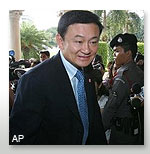
Most of the disappearances occurred under Prime Minister Thaksin Shinawatra, who was ousted in a military coup in September, Human Rights Watch said.

But as usual the Army spokesman Acra Tiproch denied any abuses were continuing. "Nobody can do that now under the policy of Prime Minister Surayud Chulanont, who focuses on peace and national reconciliation," he said.

Surayud, Thaksin's army-appointed successor, has apologized to southern Muslims for past abuses and stated willingness for dialogue to resolve the unrest. The hit-and-run insurgency has alarmed foreign governments, though there is no evidence suggesting international militant groups such as al Qaeda are involved.

Despite Surayud's assurances, the Brussels-based International Crisis Group (ICG) said in a separate report last week that "credible reports of torture and extra-judicial killings" have persisted.

The ICG also said a purely military solution was bound to fail, but that Surayud's other options were limited.

Bangkok has failed to identify any militant leaders -- or indeed whether any such leaders exist -- and Thailand's large Buddhist majority remains hostile to talks on regional autonomy or greater recognition of the Malay culture and language.

"Anything seen as appeasement would be politically suicidal for Thai leaders dependent for support on voters outside the south, most of whom had no problems with Thaksin's get-tough approach," the ICG said.

Sri Kandeh Says: This brutal policy of ‘disappearance’ is apart of other suppressive policies to abate the Malay Muslim separatist movement is not new, it has been going on for decades to suppress the Malay Muslims in Southern Thailand, a province which the Thais annexed in 1902.

The province was an independent Pattani Malay Muslim Kingdom, an extension of the Langkasuka Kingdom in the northern Malay Peninsular until it was annexed. Patani was chosen insted of Chaiya, in Ligor now known as Nakhon Sithammarat by the Srivijaya Malay Empire rulers as its new capital on the Malay Peninsular when it controlled Langkasuka.

The peace loving people should note that the Malay Muslims of the southern region practice completely a different culture and religion which is similar to its fellow fellows in Sothern border. They aspire completely a distinct vision in their own land, from the Thai Buddhists which were brought down by the Thai administrators into the province.

The recently military overthrown Thai Prime minister Thaksin like any other past Sino-Thai leaders were very brutal against the Malay Muslims of the Southern Provinces.

Few days ago there was a report which the Thai police rougely claimed that the Malay Muslim students in Songkla [Malays calls Singgora] were killed by the separatist.
This is another heineus Thai policy by of using children as a target of containing the aspiration of the people.


© end sk

Monday, March 19, 2007

Three Thai Muslim Students Killed In Attack


Slaughtering of the Muslims continue in Southern Thailand.


[Via Agencies Reports ]

Saba Yoi, Thailand: At least three Muslim students were killed in an attack on a school in Southern Thailand, police said on Sunday, March 18, 2007 sparking a protest in the region where sectarian tensions have recently flared.

The local Thai police said suspected Muslim separatists first launched a bomb attack at the Islamic boarding school in Songkhla province late Saturday, before opening fire inside the building, killing three boys.

It is absurd, and would never make any sense for the Muslim separatists to kill the Muslim students?

On the other hand the report also said that about 400 local villagers have blamed Thai armed forces for the slayings and they staged a protest, blocking the road leading to Pornoh Bamrungsart School and preventing the police from investigating the crime scene.

"A 12-year-old and two 14-year-olds were confirmed dead,eight students were treated at hospitals," said local police Chief Thammasak Wasaksiri.

More than 2,000 people have been killed many more Muslims were reportedly missing in separatist violence that has gripped the provinces of Yala, Narathiwat and Pattani since January 2004.

Sri Kandeh Says: It is absurd, for Muslim Separatists to kill their fellow Muslims, and what more their own students? It is their kin. What a horrible pretense? It was done none other by the Thais authorities themselves. The Thai authorities will do eveything in conducting continues attrocities again the Malay Muslims in the South which they had annexed the region in 1902. Prior to that Southern Thailand part of the Malay peninsula and still part of it It was an independent Malay Muslims Pattani Kingdom an extension of old Langkasuka Kingdom.

Wednesday, February 21, 2007

Sounthern Thailand


The Conflicts


Almost every other day we hear bombing in Sounthern Thailand. One need to understand the source and the antecedents of this conflict., the southern provinces remained largely autonomous. However, during the 18th and early 19th centuries due to the threat posed by Western colonial expansionism in South Asia, Thailand sought to enlarge its expansion over the region.

The Thai annexed, consolidated and absorbed the Malay southern provinces into several regions with administrative centres at Phuket, Chumphon, Nakhon Si Thammarat [Ligor] and Patani each under the direct control of Bangkok.

The Malay Muslim communities which based in the country’s southern provinces were originally part of an independent Malay Kingdom of Pattani in northern Malay Peninsula untill it was annexed by the Thais and incoporated into Thailand in 1902. Patani were later fragmented into Songkla, Naratiwat, Yala and smaller Patani entity.

The Thais were never administration were never kind to the Malays. The Malay Muslims of Southern Thailand has long been complaining of atrocities, oppression, discrimination against them and the lack of opportunities. As a result of Thais long attrocities and suppression and neglected they fought Bangkok for a separate state. Many beacame 'shahids since.'

But many had left to seek for a better life.

Recently, the Thaksin administration had butchered 187 Muslims in Tak Bai and Krusik incidents in 2004.The two incidents clearly testified the long standing Thais policy, particularly Sino-Thai prime ministers towards the Southern Malay Muslim activists. The Muslims' wrath over these issues is unavoidable and will remain untill Bangkok recognised their rights. The strong resentment had leads to clashes with the authorities.

Since January 2004 it has been hit by the surge of insurgency and more than 2,000 people have been killed.

The problems in the Southern Thailand would continue to persist if Bangkok failed to look into it objectively. Suppression, atrocities, cruelties, injustices and discrimination will never work, even for decades to come. The voilence will be there so long the wishes of the people are not respected.


End

Sunday, October 1, 2006

Surayud Sworn as New Thai PM


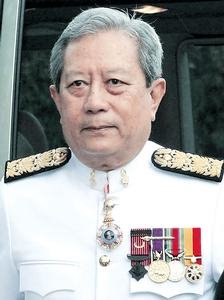
General Surayud Chulanont, Thailand’s former army chief, was on Sunday October 1, 2006 formally appointed as interim prime minister of the deeply divided country.

He pledged immediately to put the pursuit of “people’s happiness” over economic growth.

Gen Surayud, 63, who resigned from a post as privy councilor to revered King Bhumibol Adulyadej to take the premiership, said that his administration would be guided by ideals of the “self-sufficiency” economy, advocated by the monarch.

“We won’t concentrate so much on the GDP numbers,” Gen Surayud said. “We would rather look into the indicators of people’s happiness and prosperity.”

He also said he would focus on ending national political strife, and unrest in the Muslim-majority south, where an ethnic Malay separatist insurgency has claimed more than 1,700 lives. “Both problems have their roots in injustice in the society,” he said.

Gen Surayud who is widely admired by Thais for his personal integrity and his efforts to depoliticize the army during his four year tenure as its chief , insisted he never had any ambition to rule, but was simply answering the call of duty after a military coup ousted Thaksin Shinawatra, the billionaire prime minister.

The general was appointed to lead the government, despite serious concerns by the coup-makers that his proximity to the king would reinforce popular perceptions of a palace role in the events that drove Mr Thaksin from power.He was sworn in by coup leader General Sonthi Boonyaratglin. The military also unveiled a short-term constitution under which they will maintain substantial powers until elections promised for October 2007. The swearing-in ceremony for Gen Surayud came hours after the announcement the former army commander would be the new interim leader. "The king has appointed him to administer the country from now on," Gen Sonthi said during the ceremony at Government House.

Surayud Chulanont, is an army veteran, and one of the few senior Thai figures who is respected by military and civilian leaders alike.

Saturday, September 23, 2006

Thailand's Restive Southern Provinces.

  • Originally part of an independent Malay Sultanate of Pattani until Bangkok annexed in 1902
  • Home to Thailand's Pattani Malay Muslims minority
  • Muslim rebels fought the government for decades
  • Militants attacks surge since 2004, 1700 dead
  • Security forces' response criticised by rights groups

Thailand's minority Malay Muslim communities based almost exclusively in the country’s southern provinces which originally were part of the Malay Kingdom of Pattani annexed in 1902. As they have been suppressed and neglected they fought Bangkok for decades for a separate state.

Thailand's Malay Muslims complain of of long oppression, discrimination and a lack of opportunities, a resentment which occasionally leads to clashes with the authorities.

Since January 2004 it has been hit by surge of insurgency which more than 1,700 people dead.

Region apart

Thailand's Malay Muslims are largely concentrated in the southern provinces of Narathiwat, Pattani, Songkhla, Satun and Yala.

The southern provinces were originally part of an independent Malay Sultanate of Pattani which adopted Islam in the mid-13th century. Thailand annexed the region in 1902 and systematically suppressed its culture and identity.

The local inhabitants have been neglected and the areas are less prosperous than central Thailand.

The Malay Muslims, as the native inhabitants of the regions complain they are at a disadvantage compared to the non-native Thai Buddhist which was systematically transmigrated into Malay Muslim majority provinces.

That Malay Muslim living in the region is distinctively different from the rest of the Thai population. Linguistically they speak Jawi, a Malay dialect and most importantly they are Muslims, abiding byIslamic rules and restrictions.

The people living there had and still do have far more in common with their Malay neighbours in Malaysia.

Increasingly estranged and suppressed by the Bangkok government, Muslim separatists began an organised insurgency in the 1970s fighting for separation.

Thousand of the Pattani Malay Muslims left their land and became Diasporas for a better life.

The violence died down in the 1990s but surged during Thaksin’s administration in January 2004 with a raid on an army depot signalled a return to the violence. Four soldiers were killed and 400 guns, most of them M-16 rifles, were stolen from a store in Narathiwat province.

Since then there have been frequent incidents in which symbols of authority have been targeted by Muslim gunmen.

The deadliest incident happened on 28 April when hundreds of suspected Islamic militants launched a series of raids on security posts in the region.

The day ended in the massacre of more than 100 of the poorly-armed militants, and there was international concern over the degree of force used by security personnel.

Another bloody incident took place in the southern district of Takbai in October 2004. More than 80 people died after a protest turned violent, Seven were killed at the scene and 78 died in army custody from suffocation, after being brutally loaded into army trucks.

That incident clearly testified that Thaksin just like any previous Sino-Thai leader who used to butcher the Southern Malay Muslim activists.

Links to radical groups

The Thai government continues to insist that most of the attacks in the south can be attributed to local criminals.

But it seems evident that organised Islamic separatist groups are playing a part in the violence.

There are a number of Muslim separatist groups known to operate in southern Thailand - including Pulo (the Pattani United Liberation Organisation), BRN (the Barisan Revolusi Nasional) and GMIP (Gerakan Mujahadeen Islam Pattani).
Gen Sonthi, the first Muslim ever to lead the army in Buddhist-majority Thailand, may also use the coming months to try to subdue separatist insurgency by ethnic Malay Muslims in southern Thailand.

The leader of one insurgent group on Thursday welcomed the coup by Gen Sonthi, who had previously advocated peaceful dialogue to end a bloody conflict.

Thursday, September 21, 2006

Thai Military Ruler: No Elections for a Year


[Via AP]Thailand's new military ruler, winning crucial royal backing for his bloodless coup, announced Wednesday September 21, 2006 that he would not call elections for another year. As usual playing big bother, the U.S. and other Western nations expressed disapproval and urged a swift restoration of democracy.

Army commander Gen. Sonthi Boonyaratglin at his first news conference since seizing power Tuesday night, said he would serve as de facto prime minister for two weeks until the junta — which calls itself the Council of Administrative Reform — chooses a civilian to replace him and drafts an interim constitution.

Sonthi sealed the success of his coup by receiving royal endorsement as leader of the new junta, while ousted Prime Minister Thaksin Shinawatra, who watched events unfold from abroad, pondered his future and the threat of possible prosecution at home.

Receiving the imprimatur of revered King Bhumibol Adulyadej legitimizes the takeover, and should effectively quash any efforts at resistance by Thaksin's partisans. Thaksin's ouster followed a series of missteps that prompted many to accuse the prime minister of challenging the king's authority — an unpardonable act in Thailand.

There appeared to be a sense of relief among many Thais at the resolution of political tensions that had hung over the nation since the beginning of the year, when street demonstrations demanding Thaksin step down for alleged corruption and abuse of power gained momentum. Thailand has had no working legislature and only a caretaker government since February, when Thaksin dissolved parliament to hold new elections in an effort to reaffirm his mandate.

The presence of tanks and armed soldiers on the streets of Bangkok, a city of more than 10 million, was taken with good humor in an almost holiday atmosphere. Schools, government offices and the stock market were closed Wednesday but were to reopen Thursday.

There was also hope that a new regime could more effectively address an Islamic insurgency in the south that has resulted in more than 1,700 deaths in the last two years.

Sonthi, a 59-year-old Muslim in a predominantly Buddhist country, had proposed several weeks ago opening talks with the southern Malay Muslim separatists, but Thaksin's government vehemently opposed such a move.

Sonthi shocked the public and internationally with his admission that security agencies had accumulated "black lists" of suspected Malay Muslim militants in the south.He stopped short of saying the list was used for indiscrinate and targeted killings Malay Muslims by the Thaksin administration.He said the list created misunderstanding and was an obstacle to national reconciliation. He called for an end to blacklists.

The Army chief has often been singled out in Thaksin's criticisms whenever serious incidents in the South have erupted. This has failed to tarnish his reputation as a professional soldier. Most analysts see Thaksin as the real obstacle to reconciliation.

The Southern Malay Muslims has long been fighting for a separation from Bangkok. The southern provinces were originally part of the ancient Malay Kingdom of Pattani, a region which adopted Islam in the mid-13th century. The Southern Pattani region was annexed by Thailand in 1902.

“Thaksin's government has totally failed to quell the violence, so we are pinning our hope on the Council of Administrative Reform,” said Srisompob Jitpiromsri, a political scientist from Prince of Songkhla University in the southern province of Pattani.

Outside Thailand, the coup drew criticism from several foreign governments and human rights groups, who expressed dismay at the overthrow of a popularly elected government.

The Bush administration denounced the coup and hinted that U.S. aid, military cooperation and improved trade relations might be in jeopardy. "There is no justification for it," State Department deputy spokesman Tom Casey said. "It is a step backward for democracy."

The European Union, which demanded "that the military forces stand back and give way to the democratically elected political government."

Human Rights Watch said the military "should immediately restore fundamental human rights and protect those exercising their rights to free expression, association and assembly."

The economic fallout was still hard to judge. The stock market was closed, but in currency markets the Thai baht fell sharply, its weakness rippling out to other Asian currencies, including the Singapore dollar, Malaysian ringgit and Philippine peso.

The International Monetary Fund, which bailed Thailand and some of its neighbors out of a financial crisis in the late 1990s, believed the region would be little affected, said the IMF's chief, Rodrigo de Rato. "Thailand's economy is fundamentally strong," he said.

The swift and bloodless nature of the coup gave hope that the effects on Thailand's large tourist industry might be minimal, though several nations advised caution. Britain told its citizens in Thailand to stay in their homes, while Japan, Australia and Canada similarly advised caution.

Sonthi made two public appearances Wednesday, the first to make a brief formal announcement:

"We would like to reaffirm that we don't have any intention to rule the country and will return power to the Thai people as soon as possible," he said, flanked by the three armed forces chiefs and the national police chief.

His second appearance came at a news conference attended by about 300 Thai and foreign journalists. Seated on a stage, he spoke calmly but with confidence and smiled occasionally. Sonthi said Thailand's foreign policy and international agreements will remain unchanged, and that new general elections will be held by October 2007.

He said the coup, the country's first in 15 years, was necessary to heal rifts in Thai society, and to end corruption, insults to the king, and what the general called Thaksin's attempts to destroy democratic institutions.

Although Thaksin handily won three general elections, opponents accused him of emasculating democratic institutions, including packing the state Election Commission with cronies and stifling media.

Thaksin had a power base among the rural majority, a previously neglected segment who benefited from his populist policies of government assistance.

The junta warned farmers and workers not to stage protests, and military roadblocks were set up on the outskirts of Bangkok, reportedly to keep Thaksin's supporters from reaching the capital. Two minor pro-Thaksin demonstrations were briefly staged in Bangkok before being gently broken up by the authorities.

Thaksin flew from New York, where he had been attending the U.N. General Assembly, to London, where he maintains a residence. Sonthi also said "those who have committed wrongdoing have to be prosecuted according to the law."

Sri Kandeh says: Looking back into history a corrupted and cruel leader like Thaksin would ultimately get his price. As one of the Pattani Diasporas I always believed that time will tell.

Wednesday, September 20, 2006

Profile of Gen Sonthi Boonyaratglin


Meteoric rise to Power

Never one of Thaksin's favourites, Sonthi is vknown to be softspoken and is respected for his professionalism .

Close to the country's King, Bhumibol Adulyadej, and has been seen as an unofficial spokesman for the monarch.

After parliamentary elections in April, which were later annulled because of concerns about their legitimacy, he said that King Bhumibol was "saddened" by the situation.

When General Sonthi Boonyaratglin, the leader of last night's coup, rose to become Army commander-in-chief in the annual military reshuffle October 2005, he did not really enjoy the confidence of then Prime Minister Thaksin Shinawatra.

Sonthi built his career at the Special Warfare Command. But he was not considered a member of Thaksin's circle.

Therefore, his appointment came as a surprise to many who thought Thaksin would finesse one of his former classmates into the job.

Sonthi's appointment was backed by retired armed forces Supreme Commander General Surayud Chulanont and Privy Council President General Prem Tinsulanonda. Both serve as advisers to His Majesty the King.

The Army chief - the first Muslim to take the powerful post - was reportedly on his way out and on to an inactive post in the current round of military appointments taking effect next month.

This was a result of frequent differences with Thaksin over a number of issues, including Thaksin's handling of the insurgency in the Malay Muslim majority southern provinces.
The Southern Malay Muslims has long been fighting for a seperation from Bangkok. The southern provinces were originally part of the ancient Malay Kingdom of Pattani, a region which adopted Islam in the mid-13th century. Thailand annexed the region in 1902.

Sonthi, 59, graduated from Chulachomklao Royal Military Academy in 1969 and was commissioned into the Royal Army Infantry Corps.

He went on to lead several top units, including the elite Special Warfare Command.

When the country's political conflict worsened recently, Sonthi said: "As a soldier of His Majesty, I would like to help him relieve his worries and the Army will adhere strictly to whatever advice he gives us."

As the political situation worsened, Sonthi repeatedly denied coup rumours stealing headlines and fuelling concerns of civil unrest.

During the past three months, Sonthi was seen with Prem at a number of high profile social functions and speeches.

These included Prem's controversial talk at Chulachomklao calling on cadets to reject corrupt leaders and reminding them their loyalty lay with His Majesty.

Prem likened the military to horses, a government to jockeys and said His Majesty was the real owner of horses.

Softspoken and known for his professionalism, Sonthi shocked the public here and internationally with his admission that security agencies had accumulated "black lists" of suspected Malay Muslim militants in the southern ptovinces.

He stopped short of saying the list was used for indiscrinate and targeted killings Malay Muslims by the Thaksin administration.

He said the list created misunderstanding and was an obstacle to national reconciliation. He called for an end to blacklists.

The Army chief has often been singled out in Thaksin's criticisms whenever serious incidents in the South have erupted. This has failed to tarnish his reputation as a professional soldier. Most analysts see Thaksin as the real obstacle to reconciliation.

The billionaire politician never gave Sonthi a much needed mandate to deal with the complex command structures of myriad security agencies in the region.

Interagency rivalries and overlapping division of Labour continue to be the hallmark of the government's handling of the insurgency.

This is expected to be high on Sonthi's agenda even amid the political turmoil in Bangkok.
©TheNation

Thursday, June 1, 2006

Grisly Find In Thai South Sparks Death Cause Probe.


Thailand's top forensics expert said Wednesday that she is concerned about the cause of death after bodies were found in unmarked graves at a cemetery in the violence-plagued south.

Thursday, June 01, 2006

Thailand's top forensics expert said Wednesday that she is concerned about the cause of death after bodies were found in unmarked graves at a cemetery in the violence-plagued south.

That came amid speculation that bodies already unearthed there are among hundreds of suspected Muslim insurgents executed by security forces and buried at the site.

Pornthip Rojanasunand, head of forensics for the Justice Department, said a team of her experts along with rights commissioners will examine graves at a Chinese cemetery in Pattanis province to map out a plan to exhume more than 300 bodies buried there since the end of 2004.

"Many of these [people] died of unnatural causes," she said, "so we need to make a thorough examination." She did not elaborate.

The bodies will be exhumed and moved to the nearby city of Hat Yai, where DNA testing is likely.The victims died in 2004 and 2005, Pornthip said, "but I cannot say if they were linked to the violence in the south."

Unmarked graves were discovered in January, but they have become a focus with Senator Kraisak Choonhavan saying there were more than 500 bodies.

Many were believed to be the bodies of people abducted and killed by state authorities on suspicion of links to the region's Muslim insurgency, he said.

The government has denied the accusation, but rights groups have accused the government of killing suspected insurgents. Muslims have long blamed security forces for disappearances.

More than 1,300 people have been killed since January 2004 when separatist violence re-emerged in three Muslim-majority provinces. [ASSOCIATED PRESS]

Sunday, March 19, 2006

The Misguided Policies Toward Thai Muslims.


Nophakhun Limsamnphun, sometimes ago, wrote this in Thailand’s, The Nation.

If you ask Professor Niran Pantharakit of Mahidol University, an expert on Muslim affairs in Thailand, what went so wrong with the Thaksin government's policy on southern Thailand, where daily violence seems relentless, he would probably say something like: "Too much materialism, politics and economics, but very little spirituality."

Niran, also director of the Sheikhul Islam Office, which groups together the highest Muslim bodies here, told me the other day that the government probably missed the mark because of its inability to perceive subtle issues that fundamentally affect the mindset of most Muslim compatriots.

He was referring to subtleties in differences of history, culture, language and religion between the estimated 6 million Thai Muslims and the kingdom's Buddhist population of more than 50 million. By failing to comprehend the depths of Muslims' historical background, their unique culture, language and religious belief, Bangkok has effectively ignored the "spiritual" elements that bond Muslims all over the world with each other, resulting in misguided policies imposed by the central government at the provincial and local levels in the three southernmost provinces of Yala, Narathiwat and Pattani.

Niran also reminded me that about 80 percent of all Muslims in Thailand can trace their origins back to Malayu, present-day Malaysia, regardless of where they live now in Thailand. While the majority of these people currently reside in the 14 southern provinces, there are also significant numbers of Muslims around the country, such as in Bangkok and the nearby Central region, in Rayong [the East] and Chiang Mai [the North].

Hence, it is wrong in his opinion to suggest that there are Siamese Muslims [who are more loyal to the kingdom] and Malay Muslims [who feel closer to Malaysia], even though Muslims in southern Thailand used to have a grudge about the centralization of governance during the reign of King Rama V, in which their former royals were removed from the seat of power.

Afterwards, the difference in religious belief between Muslims and those of other faiths has periodically been used to spur hatred and violent struggles in the South. These struggles seem to have been revived in the wake of the World Trade Center attacks in New York three years ago, especially after Thailand adopted several tough measures along the lines of the U.S.-led global movement against terrorism.

In short, Bangkok has become overloaded with global geopolitical considerations while ignoring the subtle elements and sensitivity of its own people in the South. It has also turned to a security and economic-development agenda, hoping that increased military power and billions of baht in fresh cash pouring into the South will pacify the people and solve their problems.

However, it has become increasingly obvious that it doesn't work that way in the Muslim world, in which materialistic development and economic well-being are considered far less important than spiritual well-being and understanding.

And when it comes to spirituality in Islam, Niran suggests that only well-informed and well-intentioned specialists should be employed to manage the situation in the South, where he believes genuine efforts in re-creating a good understanding between Muslims and non-Muslims are urgently needed to restore peace and order.

Niran's analysis seems to be supported by the Interior Ministry's survey of more than 17,000 residents of Yala, Narathiwat and Pattani, in which 91 percent of respondents said that the single biggest factor contributing to the ongoing violence in the South, was the difference in ethnicity, religious belief, culture and historical background.

In addition, 81 percent of respondents suggested that many government officials working in the three provinces were inefficient and unresponsive to local citizen's needs.